RageLayer

Introducing RageLayer · a web toy for every framework

Turn any web page into a destructible canvas.

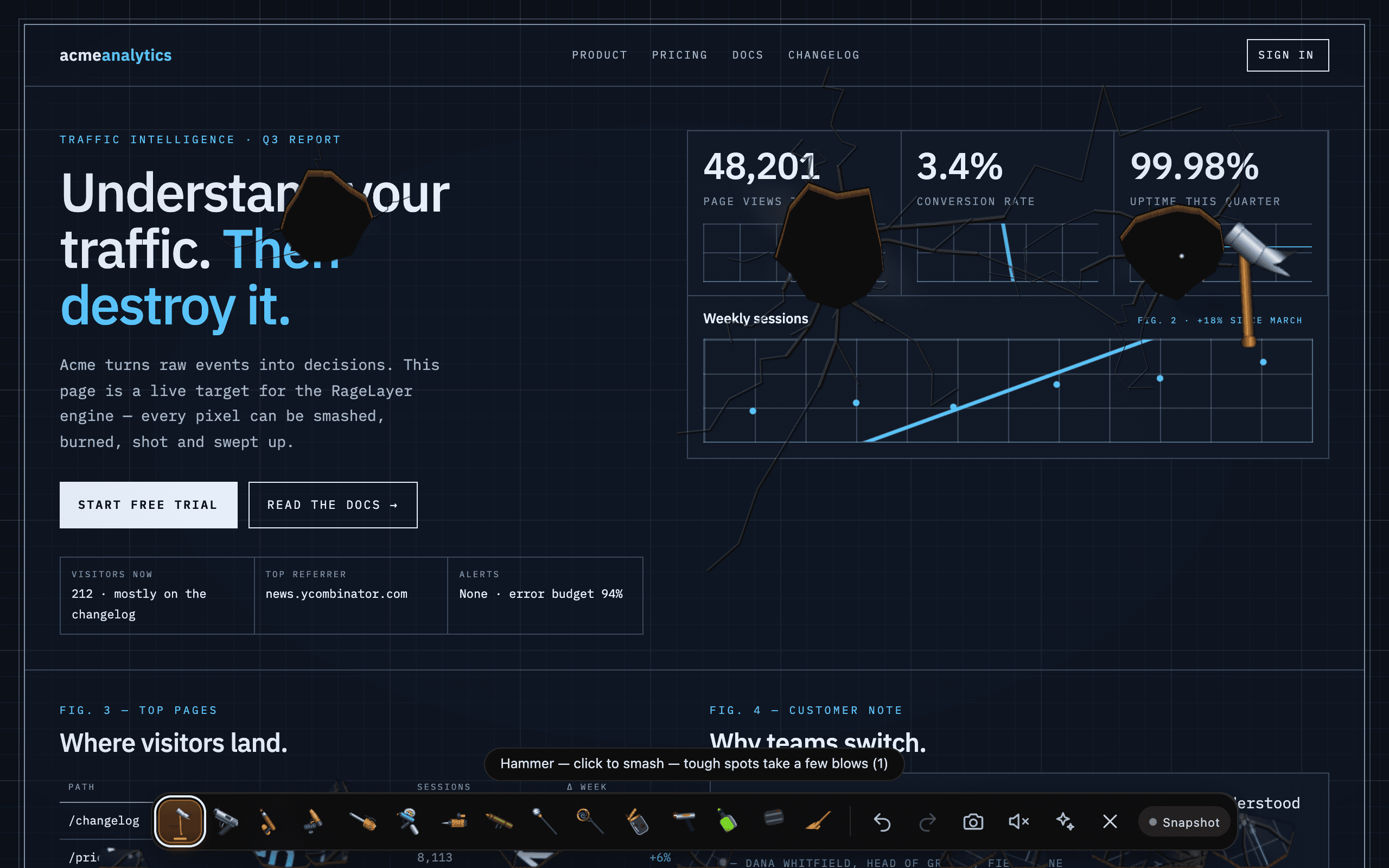
Sixteen procedural tools smash, burn, cut, corrode and explode the real DOM — then sweep every piece back into place.

Read the docs

This page is the demo. Everything below is destructible.

Tools

Sixteen tools, drawn from code.

No model assets and no network requests. They ship in three entry points, so you only pay for the ones you register.

A page covered in hammer cracks with fractured shards falling away
HammerEscalating blows, then rigid-body debris
Full-auto bullet holes torn across a page hero
GunAimed rounds punch straight through to the void
Fire and smoke burning a hole through page content
FlamethrowerFire spreads on its own fuel and keeps eating
A closed chainsaw cut dropping a whole piece out of a page
ChainsawClose a loop and the enclosed piece drops out
Coloured paint splats across a page
PaintballSplats that drip, dry, and clip to surviving pixels
A water stream sheeting across a page and dousing a fire
Water hoseDouses fire, rinses stains — a hole stays a hole
Whole content cards knocked loose from a page and falling
DemolitionKnocks whole page elements loose as single bodies
A rocket in flight trailing smoke away from its launch point
Rocket launcherArms only after it flies, so the crater moves
A forked lightning bolt striking a page and setting it alight
LightningForked bolt, burn channel, ground crawlers, fires
A black hole warping a page around its photon ring
Black holeLenses the page on the hold, detonates on release
Bugs crawling across the intact parts of a page
BugsThey crawl the survivors and avoid the void
Four more, unphotographedGravity gun, Laser cutter, Acid sprayer, Sticky bombs — all four are in the demo above.

How it works

It really is your page.

Most page-destruction toys draw a cartoon on top of your site. This one takes the page away from you first.

  1. A pristine page with the RageLayer toolbar open along the bottom
    Capture

    The DOM is rasterised into a canvas and the real page is hidden with visibility, so layout, scroll position and page height all survive.

  2. The same page after a mixed session: holes, fire, paint, and a debris pile
    Destroy

    Tools remove content pixels instead of drawing over them. A hole is a hole — what shows through it is the void behind the page.

  3. The same page half swept: bullet holes on one side, repaired page on the other
    Repair

    The broom sweeps the pristine capture back under the bristles. Closing the toolbar puts the real DOM back, untouched.

Install

Two imports and a button.

ragelayer/react
import { useState } from "react";
import { RageLayer } from "ragelayer/react";

export function DestroyButton() {
  const [open, setOpen] = useState(false);

  return (
    <>
      <button onClick={() => setOpen(true)}>Destroy this page</button>
      {open && <RageLayer onClose={() => setOpen(false)} />}
    </>
  );
}

The entry is marked "use client", so it drops into a Next.js Client Component.

  • MIT
  • ESM only
  • Zero runtime dependencies
  • TypeScript declarations
  • 16 built-in tools
  • Canvas 2D